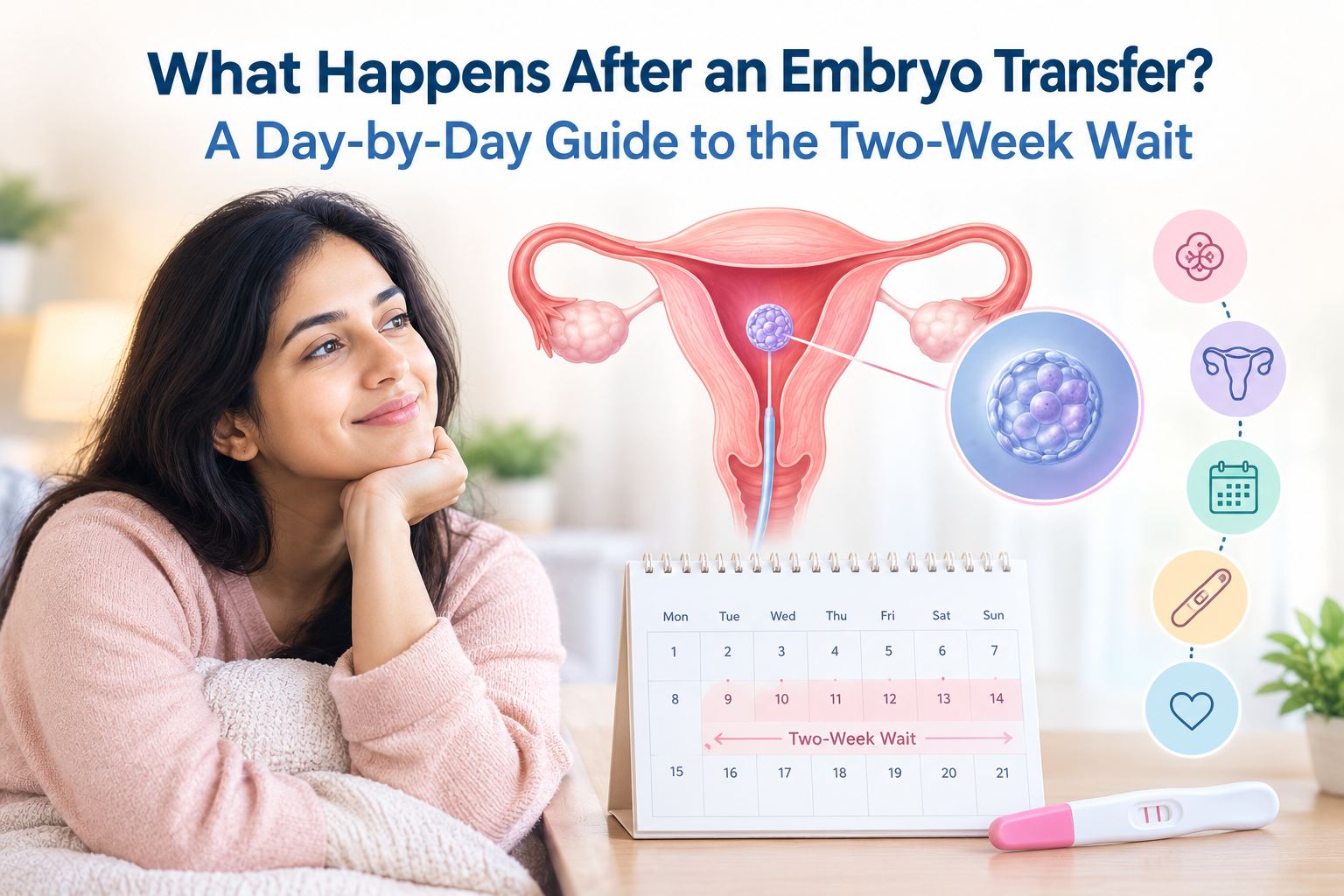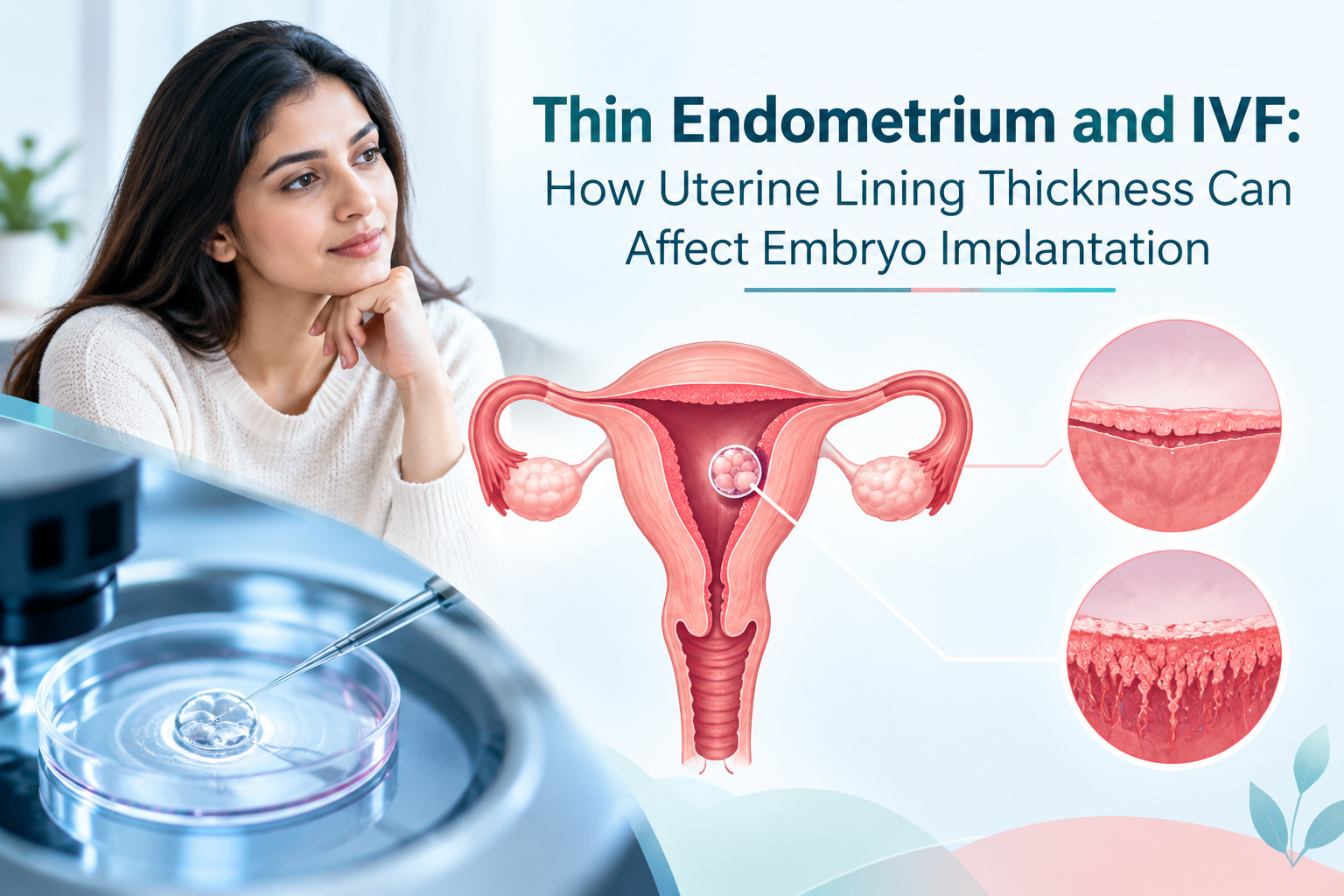
When couples begin an IVF journey, one of the most important stages happens inside the embryology laboratory—the development of embryos after fertilisation.
After eggs are retrieved and fertilised with sperm, the resulting embryos are carefully monitored as they develop. Couples often hear terms such as embryo grading, cleavage-stage embryo, blastocyst, embryo quality and embryo transfer, but may not always understand what these terms actually mean.
Embryo quality is an important part of IVF treatment, but it is not the only factor that determines whether a pregnancy will occur.
Understanding what happens between egg retrieval and embryo transfer can help couples approach IVF with clearer expectations.
During IVF, mature eggs are retrieved from the ovaries and fertilised with sperm in the laboratory. Depending on the clinical situation, conventional IVF or ICSI (Intracytoplasmic Sperm Injection) may be used.
Following fertilisation, the embryos begin dividing.
The embryology team observes their development at different stages and records important characteristics such as:
The laboratory environment and embryology team play an important role in monitoring embryos throughout this process.
An embryo is the early developmental stage that begins after fertilisation.
During the first few days, the fertilised egg undergoes repeated cell divisions. The embryo progresses through several developmental stages before potentially reaching the blastocyst stage, usually around day 5 or 6.
Not every fertilised egg will continue developing to the blastocyst stage.
This is a normal part of human reproduction and is one reason why the number of eggs retrieved does not necessarily equal the number of embryos available for transfer.
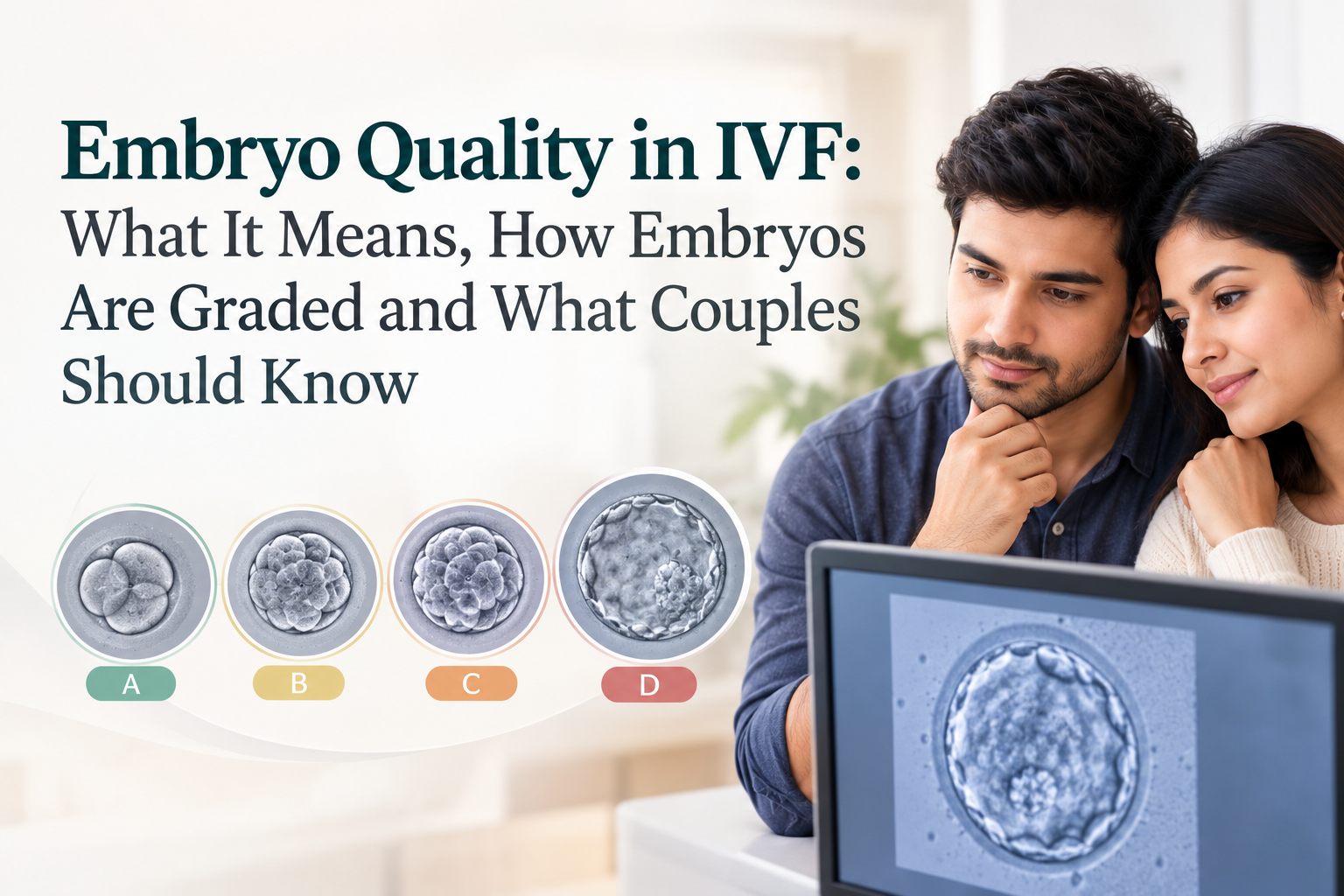
Embryo grading is a method used by embryologists to describe the appearance and developmental characteristics of an embryo.
It does not mean that an embryo is simply classified as “good” or “bad.”
Instead, grading provides information about how the embryo looks and how it has developed at the time of assessment.
For blastocysts, grading generally considers:
The inner cell mass develops into the fetus, while the trophectoderm contributes to the tissues that support pregnancy, including the placenta.
Embryologists use established grading systems to document these characteristics.
You may hear an IVF specialist mention a grade such as 4AA, 4AB, 3BB or similar terminology.
The numbers and letters describe different aspects of blastocyst development.
For example:
The Number
The number generally describes the degree of blastocyst expansion and development.
As the blastocyst develops, it expands and eventually begins the process known as hatching.
The First Letter
The first letter generally refers to the appearance of the inner cell mass, which contains the cells that will form the fetus.
The Second Letter
The second letter refers to the appearance of the trophectoderm, the outer layer of cells that contributes to the placenta and other supporting structures.
It is important to remember that embryo grading is a morphological assessment—it describes what the embryo looks like under laboratory observation.
No.
This is one of the most important points couples should understand.
An embryo that receives a favourable morphological grade may have a good potential for implantation, but embryo grading cannot guarantee implantation, pregnancy or live birth.
Pregnancy involves multiple biological factors, including:
Therefore, an embryo grade should be interpreted as one part of the complete clinical picture.
It is natural for couples to feel concerned if some embryos stop developing before day 5 or 6.
However, embryo development is a selective biological process.
Not every fertilised egg will continue dividing normally. Some embryos may stop developing at an early stage because of developmental or chromosomal abnormalities.
This means that having fewer blastocysts than fertilised eggs does not automatically indicate that something went wrong in the laboratory.
Your fertility specialist and embryologist can explain what happened during your individual cycle.
A simplified IVF laboratory journey may look like this:
Day 0 – Fertilisation
Egg retrieval takes place, followed by fertilisation using IVF or ICSI depending on the treatment plan.
Day 1 – Fertilisation Assessment
The embryology team assesses whether normal fertilisation has occurred.
Day 2–3 – Cleavage Stage
The embryo continues dividing into more cells.
Day 4 – Morula Stage
The developing embryo undergoes further changes as its cells become more compact.
Day 5–6 – Blastocyst Stage
Some embryos develop into blastocysts, which contain an inner cell mass and trophectoderm.
Depending on the individual case and laboratory assessment, suitable embryos may then be considered for transfer or cryopreservation.
Once an embryo has developed appropriately, the fertility team determines the most suitable approach for transfer.
In some situations, a fresh embryo transfer may be performed during the same treatment cycle.
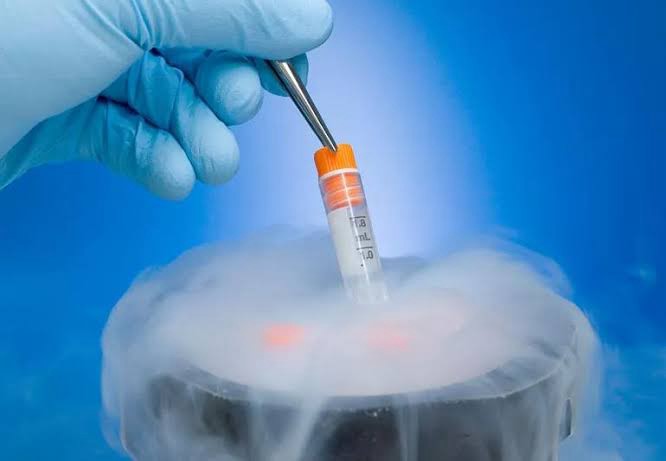
In other circumstances, embryos may be frozen and transferred during a later cycle. This is known as a frozen embryo transfer (FET).
The choice depends on factors such as the patient’s hormonal environment, endometrial preparation, embryo development and the overall treatment plan.
A frozen embryo transfer does not mean that the embryo is of lower quality. Cryopreservation allows suitable embryos to be stored for future use.
In selected cases, doctors may discuss preimplantation genetic testing (PGT).
PGT involves testing cells from an embryo to look for specific genetic or chromosomal characteristics before an embryo is considered for transfer.
However, PGT is not automatically recommended for every IVF patient.
Whether testing may be useful depends on factors such as the couple’s medical history, genetic risk, age, previous reproductive history and clinical circumstances.
A fertility specialist can explain the potential benefits, limitations and suitability of testing for an individual couple.
Embryo development depends on multiple biological factors.
Egg Factors
Egg quality is closely associated with female age and reproductive health. The ability of an egg to support normal embryo development can influence the outcome of an IVF cycle.
Sperm Factors
Sperm contributes half of the embryo’s genetic material. Male reproductive health can therefore influence fertilisation and embryo development.
Fertilisation
Not every mature egg will fertilise, and not every fertilised egg will continue developing normally.
Embryo Development
Embryos undergo several developmental stages, and some naturally stop developing before reaching the blastocyst stage.
Laboratory Conditions
Embryology laboratories use carefully controlled conditions to support embryo development and monitor embryos throughout the culture period.
Not necessarily.
An IVF cycle can involve several stages:
Eggs retrieved → mature eggs → fertilised eggs → developing embryos → blastocysts → embryos suitable for transfer or freezing
There can be a natural reduction in numbers at each stage.
For this reason, couples should not judge the outcome of an IVF cycle solely by the number of eggs retrieved.
The development of embryos is a step-by-step biological process.
Before transfer, the fertility team reviews several factors.
These may include:
The final decision regarding embryo transfer should be individualized rather than based on embryo grade alone.
The number of embryos transferred is an important clinical decision.
Transferring multiple embryos can increase the possibility of multiple pregnancy, which can carry additional maternal and fetal risks.
For this reason, fertility specialists consider the patient’s age, embryo characteristics, previous treatment history and clinical circumstances before deciding on the number of embryos to transfer.
In appropriate patients, single embryo transfer may be recommended to reduce the risk of multiple pregnancy while maintaining a reasonable chance of pregnancy.
After the embryo is transferred into the uterus, the next stage is implantation.
If implantation occurs, the developing pregnancy begins producing hormones that can eventually be detected through pregnancy testing.
This waiting period can be emotionally challenging for many couples.
Symptoms during this period can vary considerably, and the presence or absence of symptoms does not reliably confirm whether implantation has occurred.
The fertility team will advise you about the appropriate time for pregnancy testing.
If additional embryos develop appropriately and are suitable for cryopreservation, they may be frozen for future treatment.
Frozen embryos may potentially be used:
The suitability of embryos for freezing is assessed by the embryology team.
This can be emotionally difficult, but it does not automatically mean that future treatment will not work.
The fertility specialist may review:
Based on this information, the doctor may discuss whether any changes to a future treatment approach should be considered.
IVF is not simply about retrieving eggs and transferring an embryo.
A major part of the process takes place in the embryology laboratory.
Embryologists monitor fertilisation and embryo development carefully and document changes throughout the culture period. Their observations help the fertility team make informed decisions about embryo selection, cryopreservation and transfer.
At Tamara Hospital & IVF Centre, Rajajinagar, Bengaluru, fertility care includes IVF, IUI, ICSI and other reproductive treatments, supported by a dedicated embryology team and fertility specialists. (Tamara Hospital & IVF Centre)
1. What is considered a good-quality embryo?
A good-quality embryo is one that demonstrates favourable developmental and morphological characteristics according to established laboratory grading criteria. However, morphology alone cannot guarantee implantation or a successful pregnancy.
2. Is a Grade A embryo guaranteed to result in pregnancy?
No. Embryo grading describes appearance and development. Pregnancy depends on several biological and clinical factors.
3. Why do some embryos stop developing?
Embryos may stop developing for different biological reasons, including chromosomal abnormalities. Not every fertilised egg is capable of developing into a blastocyst.
4. Is a blastocyst better than a Day-3 embryo?
Blastocyst culture allows embryos to be observed for additional days and may help the fertility team select embryos that continue to demonstrate appropriate development. However, the decision about embryo culture and transfer should be individualized.
5. Can a lower-graded embryo result in pregnancy?
Yes. Morphological grading is not a guarantee of reproductive outcome. Embryos with different grades can have different developmental potential, and the treating team interprets the grade alongside the complete clinical picture.
6. What is the difference between embryo grading and genetic testing?
Embryo grading evaluates the embryo’s appearance and developmental characteristics under laboratory observation. Genetic testing evaluates specific genetic or chromosomal characteristics using laboratory testing. They are not the same assessment.
7. Can frozen embryos be used later?
Yes. Embryos that are suitable for cryopreservation can be stored and potentially used during a future frozen embryo transfer, depending on the treatment plan.
8. Does embryo quality depend only on the woman?
No. Embryo development involves genetic contributions from both the egg and sperm, along with other biological and laboratory factors.
9. How long does it take for an embryo to become a blastocyst?
An embryo commonly reaches the blastocyst stage around day 5 or day 6 after fertilisation, although developmental timing can vary.
10. What should couples do if they have repeated poor embryo development?
A fertility specialist can review the complete IVF cycle rather than focusing on one factor alone. The review may include egg number and maturity, fertilisation, sperm parameters, embryo development, maternal age, previous treatment history and other relevant findings.
IVF involves several important stages, and embryo development is one of them.
From egg retrieval and fertilisation to embryo culture, blastocyst development, grading and transfer, every stage provides information that helps the fertility team plan treatment.
Most importantly, an embryo grade is not a prediction of your entire fertility journey. It is one piece of clinical information that should be interpreted by your fertility specialist in the context of your individual circumstances.
If you are considering IVF or have questions about embryo development, embryo grading or previous IVF outcomes, a detailed consultation can help you understand your options.
Rajajinagar, Bengaluru
Tamara Hospital & IVF Centre provides fertility and reproductive care including IVF, IUI, ICSI and male infertility treatment, with fertility specialists and embryology support. (Tamara Hospital & IVF Centre)
Book a fertility consultation to discuss your individual treatment plan.

MS (OBG), Diploma in Reproductive Medicine (Germany), Diploma in Ultrasonography, Consultant Obstetrics & Gynecology Infertility
Dr. Aishwarya has an experience of over 7 years. She is very passionate about artificial reproductive techniques and she constantly updates herself with the latest techniques.


05/04/2025

16/01/2025

10/08/2023
10/08/2023

10/08/2023
10/08/2023

24/07/2023

04/07/2023
04/07/2023
17/06/2023

18/05/2023

24/04/2023

16/03/2023

21/02/2023
21/05/2022

17/03/2021

05/03/2021

02/03/2021

17/02/2021

22/01/2021
18/01/2021

12/01/2021

04/01/2021

31/12/2020

28/10/2020

06/08/2020
03/07/2020

20/06/2020

12/05/2020

14/03/2020

29/02/2020

06/02/2020

State of the science Equipment and Treatment Experience of 35 plus years in patient service Advanced & cost effective Fertility treatment Boutique Birthing Suites Our doctors are from among the best in Bangalore Ambience which is beautiful and pleasant.
#34-3, 10th Cross, 1st N Block,
Opp. Vardhaka Saradar Patel School,
Rajajinagar, Bangalore – 560 010
Telephone : +91 82962 60095