When couples are trying to conceive, fertility discussions often focus on sperm count, motility and morphology. But sperm health involves more than what can be seen in a routine semen analysis.
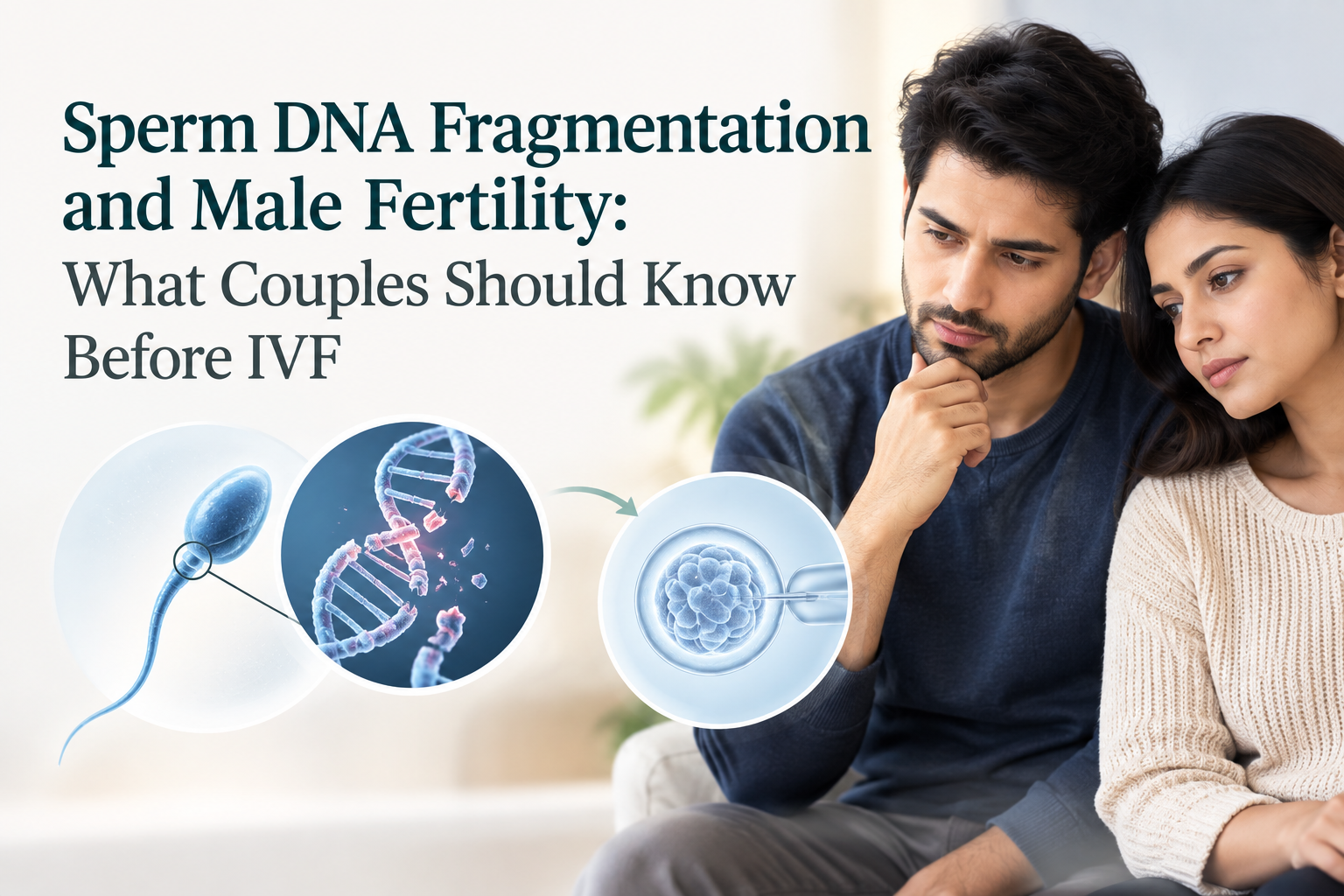
One factor that may be considered in selected fertility situations is sperm DNA fragmentation—damage or breaks in the genetic material carried by sperm.
At Tamara Hospital & IVF Centre, understanding both male and female reproductive factors is an important part of creating an individualized fertility treatment plan.
Sperm DNA fragmentation refers to damage within the DNA of sperm cells.
A man may have a seemingly acceptable semen analysis while still having a degree of sperm DNA damage. However, sperm DNA fragmentation testing is not considered a routine first-line test for every man undergoing an infertility evaluation. Its usefulness depends on the couple’s individual medical history and fertility circumstances. (AUA)
Several factors have been associated with increased sperm DNA damage, including:
Not every person with these factors will have sperm DNA fragmentation, and having a risk factor does not automatically mean infertility. (ESHRE)
Research suggests that increased sperm DNA fragmentation may be associated with difficulties in natural conception and some adverse reproductive outcomes. However, the evidence is not uniform, and the clinical usefulness of testing varies between situations. (ESHRE)
This is why fertility evaluation should not depend on a single test result.
A fertility specialist may consider additional male-factor evaluation based on the couple’s history, previous treatment outcomes and clinical findings.
For example, further assessment may be discussed in situations such as:
Importantly, major guidelines differ on exactly when sperm DNA fragmentation testing should be used, so it should be considered based on individual circumstances rather than as a routine test for everyone. (AUA)
Some factors affecting sperm health may be modifiable. Depending on the individual, a fertility specialist may recommend addressing:
Smoking and tobacco: Avoiding tobacco is important because tobacco exposure can adversely affect reproductive health and sperm parameters. (ASRM)
Lifestyle: Maintaining a healthy lifestyle, regular physical activity and balanced nutrition can support overall reproductive health.
Medical conditions: Conditions such as varicocele or infections may require appropriate medical evaluation and treatment.
Medication and environmental exposure: Certain medications and occupational or environmental exposures may need to be reviewed with a doctor.
Because sperm production takes time, changes in lifestyle or treatment may not produce immediate changes in semen parameters.
Not necessarily.
IVF and related techniques can help address certain fertility challenges, but the appropriate treatment depends on the underlying cause, sperm characteristics, female partner’s reproductive health, age and previous treatment history.
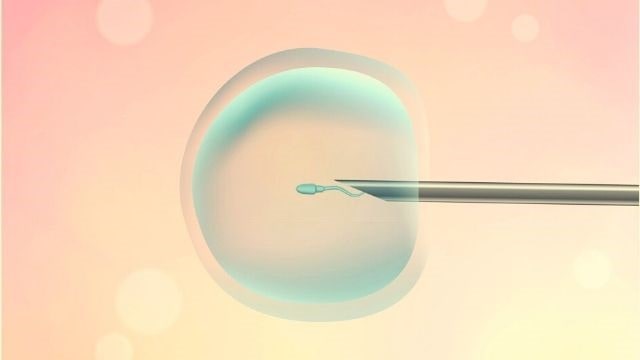
In some cases of significant male-factor infertility, ICSI (Intracytoplasmic Sperm Injection) may be considered as part of an IVF treatment plan. The decision should be made by a fertility specialist after evaluating the couple.
Fertility is a couple-based issue. Looking at only one parameter—whether it is egg reserve, sperm count or DNA fragmentation—cannot provide the complete picture.
A comprehensive assessment may consider:
At Tamara Hospital & IVF Centre, Rajajinagar, Bengaluru, fertility treatment is tailored according to the individual needs and clinical circumstances of each couple. The centre provides fertility services including IVF, IUI, ICSI and male infertility care. (Tamara Hospital & IVF Centre)
1. Is sperm DNA fragmentation the same as low sperm count?
No. Sperm count measures the number of sperm present in a semen sample, while DNA fragmentation relates to damage within the genetic material of sperm.
2. Should every man undergoing IVF have a DNA fragmentation test?
No. Current AUA/ASRM guidance does not recommend sperm DNA fragmentation analysis as part of the routine initial evaluation of every infertile couple. Testing may be considered in selected clinical circumstances. (AUA)
3. Can a man have normal semen analysis but still have sperm DNA damage?
Yes. Routine semen analysis and sperm DNA fragmentation assess different aspects of sperm health.
4. Can lifestyle changes improve sperm health?
Addressing modifiable factors such as tobacco exposure, unhealthy lifestyle habits and certain medical conditions may support reproductive health. A fertility specialist can provide individualized guidance.
5. Is high sperm DNA fragmentation a reason to avoid IVF?
Not necessarily. A test result should be interpreted in the context of the couple’s complete fertility history. Treatment decisions should be made with a fertility specialist.
6. When should a couple seek fertility evaluation?
For couples having regular, unprotected intercourse, ASRM recommends evaluation after 12 months when the female partner is under 35, and after 6 months when she is 35 or older. Earlier evaluation may be appropriate when there are known fertility risk factors or concerns.
Male fertility is about more than sperm count alone. Sperm quality, reproductive history and the health of both partners can all contribute to the journey toward pregnancy.
If you have experienced repeated fertility treatment difficulties, recurrent pregnancy loss or concerns about male fertility, speaking with a fertility specialist can help determine which evaluations are appropriate for your situation.
Tamara Hospital & IVF Centre, Rajajinagar, Bengaluru provides comprehensive fertility care with individualized evaluation and treatment options for couples seeking help with conception.

MS (OBG), Diploma in Reproductive Medicine (Germany), Diploma in Ultrasonography, Consultant Obstetrics & Gynecology Infertility
Dr. Aishwarya has an experience of over 7 years. She is very passionate about artificial reproductive techniques and she constantly updates herself with the latest techniques.


05/04/2025

16/01/2025

10/08/2023
10/08/2023

10/08/2023
10/08/2023

24/07/2023
04/07/2023
04/07/2023

17/06/2023

18/05/2023

24/04/2023

16/03/2023
21/02/2023
21/05/2022

17/03/2021

05/03/2021

02/03/2021

17/02/2021

22/01/2021
18/01/2021

12/01/2021

04/01/2021
31/12/2020

28/10/2020

06/08/2020
03/07/2020

20/06/2020

12/05/2020

14/03/2020

29/02/2020

06/02/2020
State of the science Equipment and Treatment Experience of 35 plus years in patient service Advanced & cost effective Fertility treatment Boutique Birthing Suites Our doctors are from among the best in Bangalore Ambience which is beautiful and pleasant.
#34-3, 10th Cross, 1st N Block,
Opp. Vardhaka Saradar Patel School,
Rajajinagar, Bangalore – 560 010
Telephone : +91 82962 60095